Staying socially connected can be hard for older adults—especially those living with memory loss. But the connection is more than just company. It’s essential for emotional well-being, mental clarity, and physical health. That’s why social engagement for seniors plays such a critical role in memory care.
At Palm Beach Memory Care, we understand that every conversation, shared activity, and quiet moment with others helps seniors feel more like themselves. This article explores the real benefits of social interaction and how it’s woven into daily life in memory care.
What Is Social Engagement for Older Adults?
Simple Definition and Examples
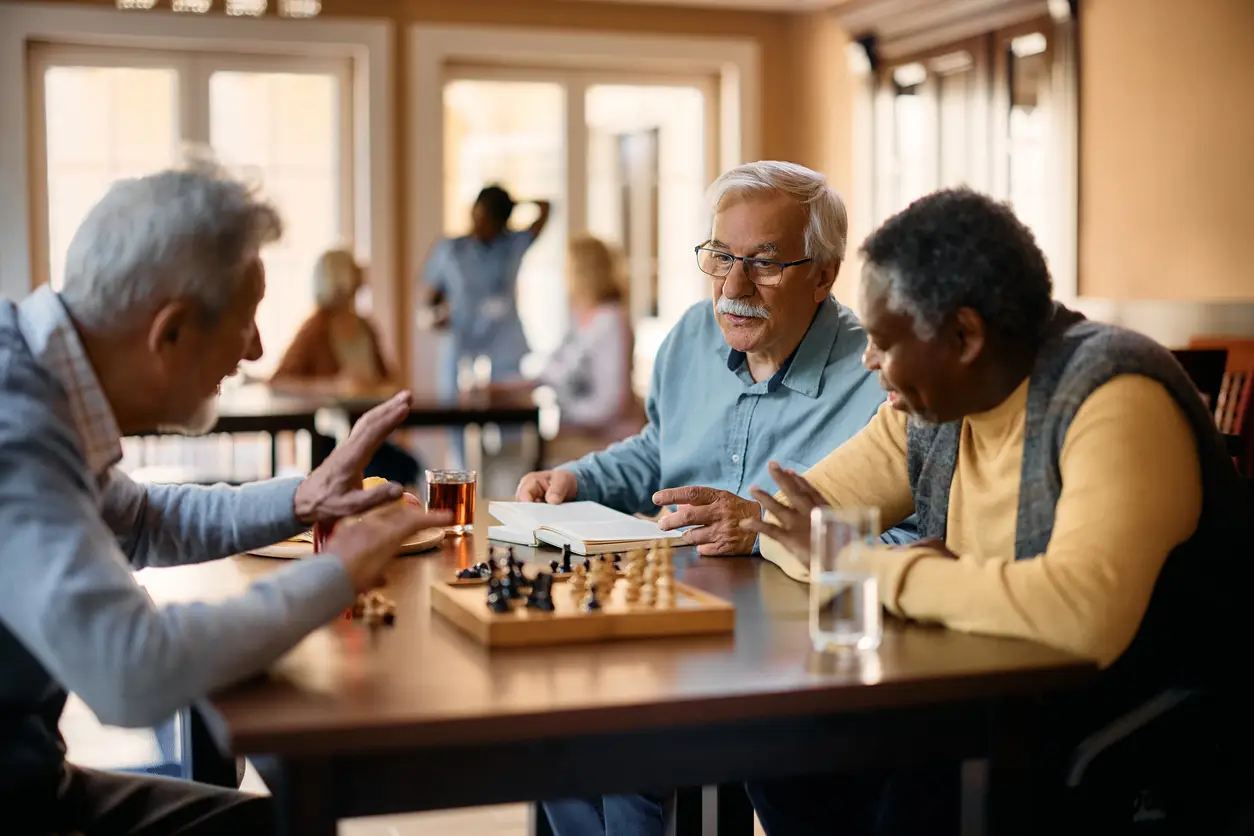
Social engagement means staying connected to other people in meaningful ways. It’s not just being in the same room—talking, laughing, listening, and sharing moments that feel real.
In memory care, social engagement can include:
- Group music or art activities
- Eating meals with peers
- Daily conversations with caregivers
- Walking clubs or porch chats
- Reminiscence groups using photos or music
Why It Looks Different in Memory Care
Seniors with dementia may not engage the same way each day. That’s okay. Care teams adapt activities to match each person’s ability and energy, focusing on connection rather than performance.
Why Social Engagement Matters in Dementia Care
Mental and Cognitive Benefits
Being socially active can help slow the pace of cognitive decline. According to the National Library of Medicine, regular interaction reduces the risk of memory loss and promotes better brain health in later life.
Even brief, consistent interaction—like a daily greeting or guided group game—can help seniors feel more alert and mentally stimulated.
Emotional and Psychological Support
Social interaction allows seniors to express themselves, feel seen, and avoid isolation. It lowers the risk of depression and anxiety, which are common among people with dementia, especially those who feel disconnected from others.
Feeling included—even in small ways—brings emotional stability and peace of mind.
Physical Health and Longevity
Social connection not only lifts spirits but also supports physical health. One of the earliest and most influential studies in this area, conducted by Berkman and Syme (1979), found that adults with fewer social contacts were more likely to pass away over a given period than those with stronger social networks.
This landmark research and decades of follow-up studies have linked social engagement to longer life expectancy, stronger immune function, and lower risks of chronic conditions. While socialization isn’t a medical treatment, it plays a protective role in contributing to overall well-being—especially in later life.
This underscores why regular interaction isn’t just a nice thing to have in memory care. It’s a core part of compassionate, evidence-based support for seniors’ health.
How Palm Beach Memory Care Encourages Social Engagement
Activities that Foster Connection
At Palm Beach Memory Care, we build daily activities around gentle, engaging moments. These activities unite residents, helping them bond and enjoy life as part of a community.
Examples include:
- Music therapy sessions
- Themed celebration days (like Tropical Tuesday or Storytime Sunday)
- Small group arts and crafts
- Baking or gardening clubs
- Shared meals and snack breaks
Tailored for Every Stage of Memory Loss
Some residents enjoy chatting in groups, while others may connect best through music, art, or one-on-one time. Our care team gets to know each person and offers options that feel comfortable and accessible so no one is left out.
We modify activities for every ability level, focusing on enjoyment and participation, not performance.
Addressing Common Barriers to Social Engagement
Challenges We Often See
Not every senior is eager to join a group. Common obstacles include:
- Fatigue or pain
- Mood changes or confusion
- Trouble hearing or speaking
- Feeling overwhelmed in large settings
How We Adapt
When needed, we create smaller, quieter settings and use sensory-based activities to help ease anxiety. Our caregivers offer encouragement without pressure and step in to guide moments of connection in a calm, supportive way.
The Role of Families in Supporting Engagement
Ways You Can Help
- Join in on group activities during visits
- Encourage your loved one to attend daily events
- Ask about social routines during care plan meetings
- Share photos, music, or stories that bring joy
Families remain a vital part of a resident’s life. Staying connected helps the resident feel loved and grounded, even on more difficult days.
Why Social Connection Is Built Into Our Care
At Palm Beach Memory Care, we understand how important connection is to our residents. That’s why we incorporate social engagement into everything we do, from serving meals to designing activity calendars. Residents are gently guided to participate in ways that feel natural and fulfilling.
Looking for more ways to help residents stay active? Check out our post on Safe and Effective Exercise Options for Seniors.
Top 5 Frequently Asked Questions
1. Why is social engagement critical for seniors with dementia?
It helps reduce loneliness, supports brain health, and brings emotional comfort. Regular interaction can improve mood and reduce agitation.
2. How can memory care communities engage seniors socially?
Through guided group activities, caregiver interaction, music, crafts, and structured daily routines designed around personal preferences.
3. Can social engagement slow cognitive decline?
Yes. Studies show that meaningful social activity supports cognitive function and may help slow memory loss in older adults.
4. What if my loved one is resistant to group activities?
We offer alternatives like one-on-one interaction, music therapy, and small sensory-focused settings to help them feel comfortable.
5. How does Palm Beach Memory Care promote daily socialization?
Through consistent, low-pressure activities, dedicated staff interaction, and a community layout that encourages daily connection.
Schedule a Visit to Palm Beach Memory Care
When seniors feel connected, they feel more like themselves. At Palm Beach Memory Care, we design daily engagement with that in mind—using small, meaningful interactions to support dignity and joy.
Ready to see what that looks like in action?
Schedule a visit to Palm Beach Memory Care and explore how we help residents thrive through connection.